
NEMT insurance: non emergency medical transportation, contract by contract
Non-emergency medical transportation is a Medicaid benefit, and the insurance a provider must show is set by whoever pays for the ride: the state Medicaid agency, its transportation broker, or a managed care plan. Federal law puts the transportation duty on the state and names no insurance limit. That is why one wheelchair van can need different coverage in two states, and why the agent you choose should already know the segment.
Tow truck insurance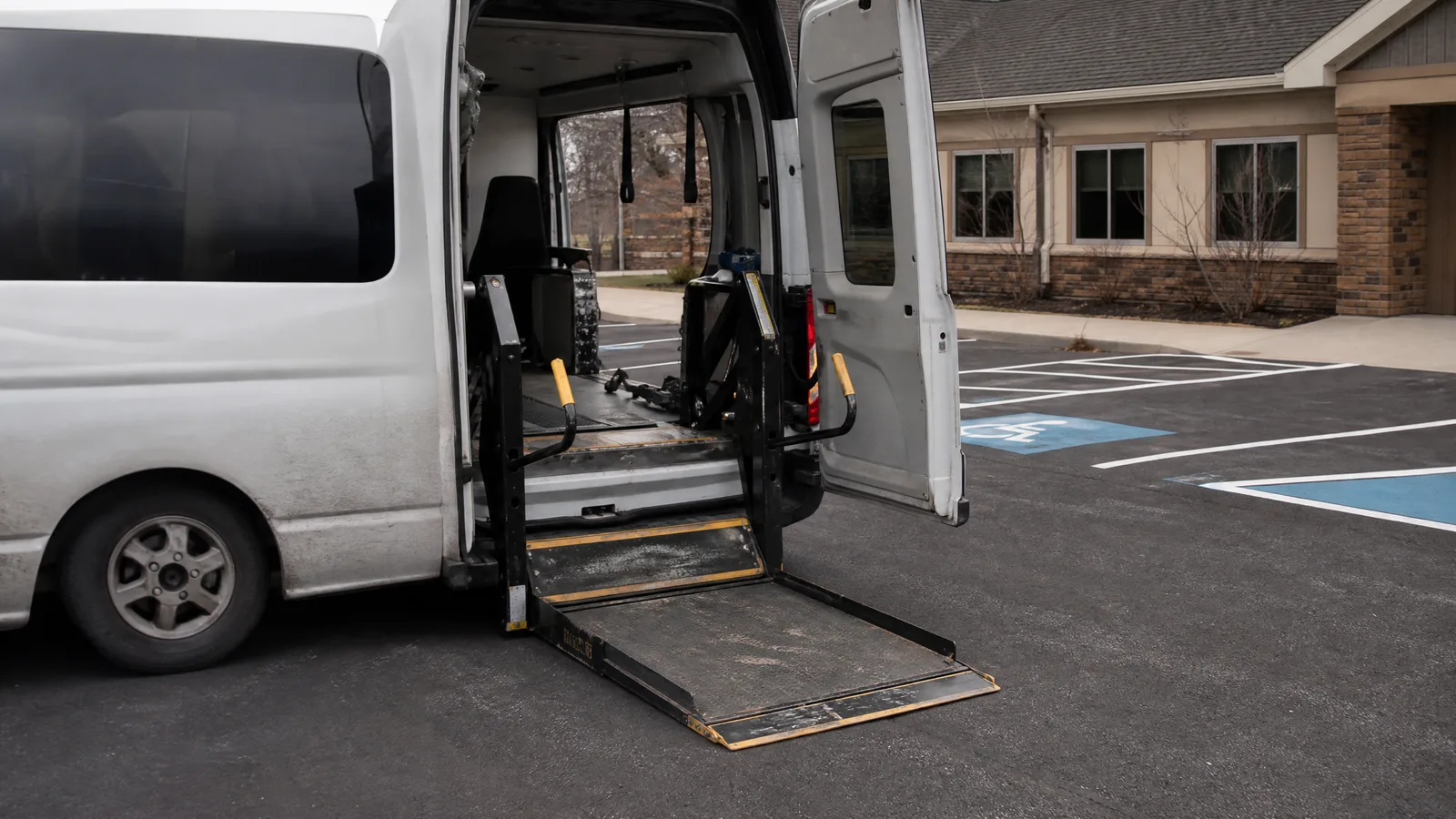
Where the requirement actually comes from
Start with the federal rule, because it explains the shape of everything below it. A state Medicaid plan must specify that the agency "will ensure necessary transportation for beneficiaries to and from providers" and must describe the methods it will use (42 CFR 431.53). The companion definition counts ambulance, taxicab, common carrier, and "other appropriate means" as transportation, and it lets a state run a non-emergency medical transportation brokerage program using wheelchair vans, taxis, stretcher cars, and bus passes (42 CFR 440.170(a)). Congress wrote the assurance into the statute itself in December 2020, in section 209 of the Consolidated Appropriations Act, 2021, so it now sits in 42 U.S.C. 1396a(a)(4)(A).
The same act added the only federal floor for the people and vehicles doing the work, paragraph (a)(87). As reproduced by CMS, it requires each state to have a mechanism ensuring that any provider or individual driver paid for non-emergency transportation to medically necessary services is not excluded from federal health care programs, holds a valid driver's license, has a process for state drug-law violations, and has a process to disclose each driver's driving history to the state (CMS Informational Bulletin, July 12, 2021). Insurance is not on that list. CMS's 2023 coverage guide says so directly: beyond (a)(87), federal Medicaid law "does not establish additional basic driver and vehicle standards", those standards are "generally determined by state agencies", and a state may add qualifications such as "carrying vehicle liability insurance" (CMS SMD 23-006, Medicaid Transportation Coverage Guide, p. 27).
So the limit is a state decision, and states delegate it. MACPAC describes three delivery models: a broker who arranges rides under a capitated payment, fee-for-service trips the state approves one by one, and managed care plans that cover transportation for their own enrollees (MACPAC). Under the first and third, the number you must show is in the broker's or plan's provider agreement. Texas uses both at once: regional managed transportation organizations and full-risk brokers for traditional Medicaid riders, and each health plan's transportation vendor for managed care members. Our Texas NEMT insurance page follows that structure into the statute and the HHSC rule.
When the FMCSA reaches a medical transport van
There is one federal insurance number in this segment, and it applies to a narrow set of operators. Subpart B of the FMCSA's financial responsibility rules "applies to for-hire motor carriers transporting passengers in interstate or foreign commerce", with exceptions for school transportation, small taxicabs not on a regular route, and commuter vehicles (49 CFR 387.27). A carrier inside it may not operate a passenger vehicle until the coverage is in effect, and cancellation takes 35 days' written notice (49 CFR 387.31). The schedule turns on seating: $1,500,000 for a vehicle seating 15 passengers or fewer including the driver, $5,000,000 for 16 or more (49 CFR 387.33, as of 2026).
Interstate commerce is defined by the trip, not the plate. It includes transportation between a place in a state and a place outside it, and between two places in one state through another (49 CFR 390.5). A provider running dialysis trips across a state line for a border-city health plan is inside Subpart B; a provider whose trips stay in-state is not, and answers to the contract instead. Note too that a van "designed or used to transport more than 8 passengers (including the driver) for compensation" is a commercial motor vehicle under the same definitions section, which brings the safety regulations with it even where the passenger minimum does not apply.
The working set for a medical transport insurance program
Commercial auto liability on every unit, at whatever limit the contract names. This is the coverage the broker's certificate request is about, and the one underwriters price first.
Physical damage on the vehicles. A lift-equipped, ADA-compliant van is expensive to replace, and a lender or lessor will require the coverage whether the contract mentions it or not.
General liability for the parts of the business that are not driving: the office, the dispatch operation, a rider who falls in your lot before reaching the vehicle.
Workers compensation once you employ drivers or attendants, in nearly every state.
Two more belong on the list as questions rather than assumptions, because the answer depends on the form and the state it is issued in. Ask whether the auto policy responds when a rider is hurt during loading, securement, or a door-to-door assist, since that is where NEMT claims differ from a taxi's. And ask whether your contract requires an abuse and molestation or professional liability form; some do, and a general liability policy may exclude it. Your rider is a patient, which is the whole difference between this class and ordinary passenger transport.
What an agent who writes NEMT will ask
Which contracts you hold or are bidding on, and a copy of each one's insurance section, because that is where the limit is. Whether any trips cross a state line. How many vehicles, which are lift-equipped, and what share of trips are wheelchair or stretcher. Driver ages and records, since brokers and plans screen driving history and the carrier will too. Whether you also run rideshare-style trips under a transportation network company arrangement, which some states treat under a different chapter entirely. An agent who asks for the contract before quoting has written this class before. One who quotes from the vehicle list alone is quoting a van, not an NEMT business.
This site does not publish premium figures. Rates vary by carrier, state, contract limit, fleet composition, driver records, and loss history. If you also run a courier operation with contractor-owned vehicles, the exposure is a different shape; see courier insurance. For a class where the state writes the minimum into the licensing statute instead of a contract, compare tow truck insurance, or start at the operation types we cover.