
Waste and logging truck insurance: what actually reaches you
A refuse route and a log haul are both usually intrastate, and the federal financial responsibility rules are written for for-hire property carriage that crosses a state line. So the number everyone quotes is probably not yours. Two exceptions matter, one on each side: hazardous waste pulls a hauler into federal law even inside one state, and OSHA's logging standard reaches every logging employer at any size. Underneath both sits a business auto form whose exclusions land directly on a load that is moved by a machine and, in the refuse case, meets the form's own definition of a pollutant.
Tow truck insurance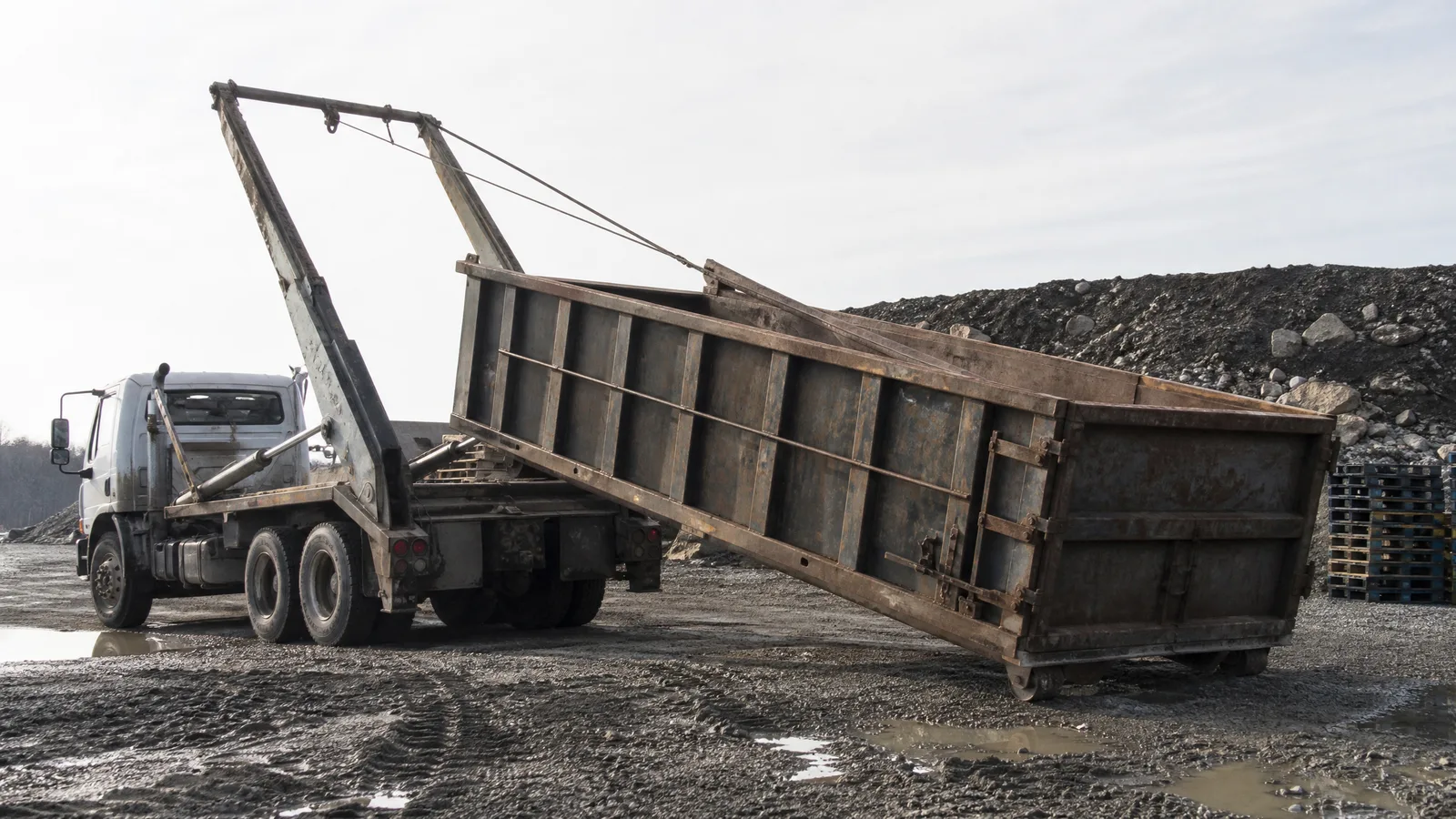
Which regulator actually reaches you
Start with the sentence that decides it. The federal minimums in 49 CFR Part 387, Subpart A, open with their own scope: "This subpart applies to for-hire motor carriers operating motor vehicles transporting property in interstate or foreign commerce" (49 CFR 387.3(a), as of 2026). Three conditions, and a refuse hauler working a municipal route or a log truck running from a tract to a mill sixty miles away usually fails at least one of them. A city hauling its own waste fails the for-hire condition as well. The subpart also states outright that its rules do not apply to a vehicle rated under 10,001 pounds.
That is why the figure people repeat is so often the wrong one. The 49 CFR 387.9 schedule of limits sets $750,000 for nonhazardous property, and that row is written for a for-hire carrier in interstate or foreign commerce in a vehicle rated at 10,001 pounds or more. It is a real requirement for the operators it names and it is not a national floor for everybody with a truck.
So where does the requirement come from instead? Three places, and every operator in this work should be able to name which one is theirs. A state permit or registration written for the material, which for timber in Texas is a TxDMV permit with a bond attached and for one class of waste route is a TCEQ registration, both below. A customer contract, which for refuse collection is usually a city franchise or a hauling agreement and is where the limit, the additional insured, and the cancellation notice are actually written. And a lender, which will require physical damage on financed units whatever anyone else says. The pattern is the same one the site describes for tow truck operations, where the state permits each truck and a city adds its own layer on top.
Waste hauler insurance: the line between ordinary and hazardous
The single most useful thing to know about insuring a waste operation is where the material stops being ordinary. On one side of that line the federal government is barely present. On the other side it arrives from two directions in the same week.
The line itself is a definition. Federal hazardous waste law excludes household waste, and defines it broadly: 40 CFR 261.4(b)(1) covers "any material (including garbage, trash and sanitary wastes in septic tanks) derived from households", and it names single and multiple residences, hotels and motels, bunkhouses, ranger stations, crew quarters, campgrounds, picnic grounds and day-use recreation areas. The exclusion follows the material through collection, transport, storage, treatment, disposal, recovery and reuse. A residential route is outside hazardous waste law as a matter of definition, not as a matter of luck.
Cross that line, usually by adding a commercial or industrial account, and two things happen at once. First, you need a federal number before the first load moves: 40 CFR 263.11 states that "a transporter must not transport hazardous wastes without having received an EPA identification number from the Administrator", applied for on EPA Form 8700-12, and 40 CFR 263.10(a) keys those standards to transportation that "requires a manifest under 40 CFR part 262". Second, the financial responsibility rules that skipped you now do not: 49 CFR 387.3(b) extends Part 387 to carriers "transporting hazardous materials, hazardous substances, or hazardous wastes in interstate, foreign, or intrastate commerce", and the 387.9 schedule puts hazardous waste on a $1,000,000 row that applies to for-hire and private carriers alike, in any quantity across a state line and in bulk inside one state, with a $5,000,000 row above it for the highest-hazard list.
Tell your agent which accounts you run and what is in the containers, in that order. An operator who describes the business as "residential and a few commercial bins" and an operator who describes it as "residential, plus a manifested pickup at a plating shop" are two different underwriting problems with two different filing obligations, and only one of them can be quoted from a vehicle list.
Garbage trucks: the body, the loader, and a load the form calls a pollutant
A refuse truck is a chassis plus a body that costs more than the chassis, and the body is what does the work. Physical damage on the standard form reaches it: Section III of the ISO Business Auto Coverage Form (CA 00 01 10 13, the edition read for this site) opens "We will pay for 'loss' to a covered 'auto' or its equipment", and the three coverage lines under it are comprehensive, specified causes of loss, and collision. Two details are worth reading rather than assuming. Overturn is named on the collision line, not the comprehensive one, and a packer rolling on a soft transfer-station approach is the loss this class is known for. And specified causes of loss is a named list, fire, lightning or explosion, theft, windstorm, hail or earthquake, flood, mischief or vandalism, and the sinking, burning, collision or derailment of a conveyance carrying the vehicle, which is narrower than comprehensive and is sometimes what a budget-shaped quote is quietly offering.
The mounted equipment question comes next, and the form answers it with a test rather than a list. An "auto" is a land motor vehicle designed for travel on public roads, or any other land vehicle subject to a compulsory or financial responsibility law where it is licensed or garaged, and it does not include "mobile equipment". Mobile equipment in turn takes in vehicles "maintained primarily to provide mobility to permanently mounted" power cranes, shovels, loaders, diggers or drills. The definition then closes the loop: "'mobile equipment' does not include land vehicles that are subject to a compulsory or financial responsibility law", and those "are considered 'autos'". A registered road truck carrying a body and an arm is on the auto side of that test. A yard machine that never leaves the site may not be, and that is a question about how the unit is used rather than what it looks like. Put the whole unit list, road and yard, in front of the agent. That same seam, where a machine stops being an auto and starts being something else, is the whole subject of the heavy equipment insurance page, and it is worth reading if any of your units spend more time working than traveling.
Then the sentence that makes refuse hauling different from every other class on this site. The form defines "pollutants" as "any solid, liquid, gaseous or thermal irritant or contaminant, including smoke, vapor, soot, fumes, acids, alkalis, chemicals and waste", and adds, closing the obvious escape, that "waste includes materials to be recycled, reconditioned or reclaimed". The pollution exclusion then removes injury and damage arising out of the discharge, dispersal, seepage, migration, release or escape of pollutants that are being transported by, handled for movement into or onto or from, or stored, disposed of, treated or processed in or upon the covered auto. Read those two provisions together and a refuse hauler's entire cargo, every day, is the thing the exclusion is written about. The form's definition of "covered pollution cost or expense" carves out the same three positions, so the cleanup cost does not come back in by another door. What to do about it is a question for an agent who writes this class, and this page does not name a product it has not read.
One more exclusion earns its place here because both halves of this page load with a machine. Injury or damage "resulting from the movement of property by a mechanical device (other than a hand truck)" is excluded "unless the device is attached to the covered 'auto'". A front loader arm or a knuckleboom bolted to the truck satisfies that condition. A separate machine on the ground, or a forklift borrowed at a customer's yard, does not, and the injury it causes is somewhere else on the insurance program or nowhere at all. Two neighboring exclusions cover the handling of property before it is accepted for movement onto the truck and after it leaves the truck at final delivery, which is the set-out and the tipping floor.
Logging truck insurance: the loader, the load, and the ground
A log truck shares the mounted-equipment and mechanical-device questions above and then parts company on two points, and both of them are about the load.
The load has value. Liability does not cover it. The care, custody or control exclusion removes "'property damage' to or 'covered pollution cost or expense' involving property owned or transported by the 'insured' or in the 'insured's' care, custody or control", which is a general rule of the form and not a judgement about logs. So the material in transit is a separate conversation: how it is valued, whether it is covered while loaded and while decked, what happens to a load that ends up in a ditch, and what the mill contract says about who carries the loss between the landing and the scale. Bring the contract to the meeting. On the refuse side this question mostly disappears, because the contents are worth nothing and the property worth scheduling is the containers sitting on customer sites.
The ground is the exposure. Log hauling happens on skid roads, landings and county roads with a high, heavy, shifting load, which is why overturn sits where it does on the physical damage lines above and why the deductible on a log unit is a different negotiation from the deductible on a delivery van. Securement failure, a loader left in the wrong position, and the trip out of the woods before the paved road are what an underwriter is picturing. Nothing on this page tells you what any of that costs; the factors are in the last section.
On the federal side, log hauling is quieter than the internet suggests. 49 CFR 395.1 carries no logging or forest-products exception to the hours of service rules, and no provision in it mentions logging, timber, forest products, or wood. The definition of "agricultural commodity" in 49 CFR 395.2 reaches horticultural products at risk of perishing, naming plants, sod, flowers, shrubs, ornamentals, seedlings, live trees and Christmas trees, and does not reach harvested timber. That is the regulation text as of 2026 and nothing more. State hours rules and the exemptions FMCSA has granted are a separate question, so confirm your own hours position with your state rather than with a forum post.
Where the injuries are, and what that does to workers compensation
This is the part of the page with numbers on it, and they are federal. In the Bureau of Labor Statistics Census of Fatal Occupational Injuries for 2024, logging workers recorded a fatal work injury rate of 110.4 per 100,000 full-time equivalent workers on 51 deaths, the highest rate of any occupation in that chart. Refuse and recyclable material collectors recorded 37.4 on 36 deaths. For scale, in the same chart driver/sales workers and truck drivers were at 25.7 on 950 deaths, and the rate for all workers in 2024 was 3.3 per 100,000. Two of the harder occupations in the country, and this page covers both of them.
Workers compensation is therefore not a line item in this business, it is a main event, and the classification codes attached to log crews and collection crews reflect it. Employer's liability, the part of the policy that responds when someone sues rather than files a claim, deserves the same attention as the limit on the trucks. So does the question of who is an employee: a contract feller, an owner-operator hauling for a producer, and a helper riding the step are three different answers, and getting one of them wrong is discovered at audit or at claim.
On the logging side there is a compliance standard behind the number. OSHA's logging operations standard, 29 CFR 1910.266, states in its scope paragraph that it "establishes safety practices, means, methods and operations for all types of logging, regardless of the end use of the wood", and it sets no employee-count threshold. It requires the employer to provide the named personal protective equipment at no cost to the employee, including hand protection for handling wire rope, cut-resistant leg and foot protection for chain saw operators, head protection where objects can fall, and eye and face protection, all kept serviceable and inspected before each work day, and it requires current first-aid and CPR training meeting its Appendix B. Meeting a safety standard is not insurance and does not buy a discount by itself. It is, in a class with this record, the first thing an underwriter will ask you to describe.
Texas: a timber permit with a bond, and one waste registration
Texas is the state this site starts with, and it shows both halves of the pattern: the requirement is written for the material, not for the truck.
Timber. TxDMV issues an Annual Timber Permit for the movement of unrefined timber, wood chips, woody biomass, and the equipment used to load timber onto the vehicle. It runs on county roads and state-maintained roadways and excludes the Interstate Highway System, and it is limited to the timber harvest counties identified in the Texas A&M Forest Service's Harvest Trend Report. The fee is $900. The condition worth knowing before you budget is the security: the applicant must have on file with TxDMV "an Annual Timber Permit Bond in the amount of $15,000 or an Irrevocable Letter of Credit", and TxDMV requires the original rather than a copy. A bond is not insurance. It guarantees performance to the state and leaves you liable to repay the surety, so it sits beside the policy rather than instead of it. A USDOT number is also required and is checked against FMCSA records for out-of-service orders before the permit issues.
Waste. One route type carries a state registration rather than a local one. TCEQ operates a permit by rule for special collection routes: anyone transporting brush, construction waste, demolition waste or rubbish in an enclosed container or enclosed vehicle to a Type IV municipal solid waste landfill claims it on TCEQ Form 20008, pays $100 per vehicle, renews a year after the original registration date, and completes a trip ticket on TCEQ Form 20078 for each load taken to the landfill, keeping the records at least three years. The rules named are 30 TAC 330.7(c)(2) and (3), Subchapters C and D of 30 TAC Chapter 330, and 30 TAC 330.671(a)(1). Read that for what it is: a registration for one kind of route to one class of landfill, not a general Texas license for refuse hauling. There is no general one, so if you run ordinary residential and commercial collection, ask TCEQ and your city rather than assuming either answer.
The rest of the state layer for specialty transport, agency by agency, is on the Texas hub.
What an agent who writes this class will ask
The material first, and in detail: residential, commercial, construction and demolition, recycling, special waste, anything manifested, or timber and wood products, with the share of each. Then the units, by body type, mounted equipment, age and value, because the arm and the packer are most of the money. Then how the load gets on and off, and whether the device that moves it is attached to the truck. Then the containers and trailers sitting away from the yard. Then radius, terrain, and the addresses where the units are garaged. Then the crews: how many, employee or contractor, and their records. Then the contracts, franchises and permits that set a limit or name somebody as an additional insured. An agent who asks what is in the containers before asking how many trucks you have understands the class.
Those questions are also, roughly, the rating inputs. A filed rate manual classifies each unit by size, business use, radius and the territory where it is principally garaged, and the choices you make on the declarations sit on top of that, including which covered auto symbol goes next to each coverage, which decides whether the truck you buy next month is covered the day you take delivery. Fleet insurance reads those symbols in full and applies the moment there is more than one vehicle. This site publishes no premium figures. Rates vary by carrier, by state, by the material, and by every input above.
If your operation is not quite either of the two on this page, the transport types hub says which page is written for which work, or start at the overview.